
Casio - Loopy No-Intro
8:45 PM

Download Casio - Loopy No-Intro
(Megaupload Mirror)
Download
(Hotfile Mirror)
Download
Bandai - WonderSwan + Bandai - WonderSwan Color No-Intro
8:31 PM

The WonderSwan was later replaced by the WonderSwan Color; although, some WonderSwan Color games are compatible with the original WonderSwan, many are designed exclusively for the WonderSwan Color and show a message such as "This cartridge is for WonderSwan Color only" when run on the original WonderSwan.
The WonderSwan was available in ten case colors, playable both vertically and horizontally, and features a fairly large library of games. As it was a console designed essentially for the Japanese market, most of the games are in Japanese, with only a few featuring English text.
While the Game Boy series have issues with fake copies of game cartridges, the WonderSwan is not known to have any fake copies of games. This is probably because the WonderSwan was not as popular as the Game Boy series." (Wikipedia)
What is No-Intro?
No-Intro is a project to create complete rom collections for various systems. It aims to provide roms which are accurate to their physical counterparts. This means no dups, hacks, or bad dumps. No-Intro collection are updated often to ensure that files are as accurate as possible. If you are an emulation junkie, these collections are a must.
Goodsets are the old standard for complete rom sets. The last goodset was updated over a year ago so many of them are missing games at this point. In addition, goodsets include a lot of bad dumps which are useless to most people. No-Intro sets contain only one good rom for each region and are packaged in individual zip archives allowing them to be played directly by most emulators. No-Intro sets are starting to take over where goodsets left off for this reason.
Normally the No-Intro collections are hard to all track down and when you do find some they are often incomplete and outdated. Well no more I say! I'm going to be uploading my No-Intro collections so that they are finally more freely available.
Download WonderSwan No-Intro
Download
Download
Download WonderSwan Color No-Intro
(Megaupload Mirror)
Download
Download
(Hotfile Mirror)
Download
Nintendo - Game Boy Advance No-Intro
6:19 PM


No-Intro is a project to create complete rom collections for various systems. It aims to provide roms which are accurate to their physical counterparts. This means no dups, hacks, or bad dumps. No-Intro collection are updated often to ensure that files are as accurate as possible. If you are an emulation junkie, these collections are a must.
Goodsets are the old standard for complete rom sets. The last goodset was updated over a year ago so many of them are missing games at this point. In addition, goodsets include a lot of bad dumps which are useless to most people. No-Intro sets contain only one good rom for each region and are packaged in individual zip archives allowing them to be played directly by most emulators. No-Intro sets are starting to take over where goodsets left off for this reason.
Normally the No-Intro collections are hard to all track down and when you do find some they are often incomplete and outdated. Well no more I say! I'm going to be uploading my No-Intro collections so that they are finally more freely available.
Download Game Boy Advance No-Intro
(Megaupload Mirror)
(Hotfile Mirror)
MAME Full Rom set
11:43 PM

This pack contains every MAME Rom ever made, about 6940 Roms (25 GBs)
(Megaupload Mirror)
Download
Download
Download
Download
Download
Download
Download
Download
Download
Download
Download
Download
Download
Download
Download
Download
Download
Download
Download
Download
Download
Download
Download
Download
Download
Download
Download
Download
Download
Download
Download
Download
Download
Download
Download
Download
Download
Download
Download
Download
Download
Download
Download
Download
Download
Download
Download
Download
Download
Download
Download
Download
Download
Download
Download
Download
Download
Download
Download
Download
Download
Download
Download
Download
Download
Download
Download
Download
Download
Download
Download
Download
Download
Download
Download
Download
Download
Download
Download
Download
Download
Download
Download
Download
Download
Download
Download
Download
Download
Download
Download
Download
Download
Download
Download
Download
Download
Download
Download
Download
Download
Download
Download
Download
Download
Download
Download
Download
Download
Download
Download
Download
Download
Download
(Hotfile Mirror)
Download
Download
Download
Download
Download
Download
Download
Download
Download
Download
Download
Download
Download
Download
Download
Download
Download
Download
Download
Download
Download
Download
Download
Download
Download
Download
Download
Download
Download
Download
Download
Download
Download
Download
Download
Download
Download
Download
Download
Download
Download
Download
Download
Download
Download
Download
Download
Download
Download
Download
Download
Download
Download
Download
Download
Download
Download
Download
Download
Download
Download
Download
Download
Download
Download
Download
Download
Download
Download
Download
Download
Download
Download
RCA Studio II (Chip-8 and Superchip) TOSEC + No-Intro
11:30 PM

"The RCA Studio II is a video game console made by RCA that debuted in January 1977. The graphics of Studio II games were black and white and resembled those of earlier Pong consoles and their clones. The Studio II also did not have joysticks or similar game controllers but instead used two keypads that were built into the console itself. The console was capable of making simple beep sounds with slight variations in length.
One distinct feature of the Studio II was its five built-in games. Also unique to the Studio II was its use of a switchbox that relayed both the modulated RF signal of the console's video to the television set while powering the console with DC power. This type of hookup would not be seen again (or thereafter) until the Atari 5200 used a similar video signal and power connection method.
The Studio II was not a successful product; it was already obsolete by the time it hit the market when compared to the previously released Fairchild Channel F, and had its "final nail in the coffin" when the superior (to both) Atari 2600 console was released only 10 months later. It was discontinued in 1979." (Wikipedia)
What is No-Intro?
No-Intro is a project to create complete rom collections for various systems. It aims to provide roms which are accurate to their physical counterparts. This means no dups, hacks, or bad dumps. No-Intro collection are updated often to ensure that files are as accurate as possible. If you are an emulation junkie, these collections are a must.
Goodsets are the old standard for complete rom sets. The last goodset was updated over a year ago so many of them are missing games at this point. In addition, goodsets include a lot of bad dumps which are useless to most people. No-Intro sets contain only one good rom for each region and are packaged in individual zip archives allowing them to be played directly by most emulators. No-Intro sets are starting to take over where goodsets left off for this reason.
Normally the No-Intro collections are hard to all track down and when you do find some they are often incomplete and outdated. Well no more I say! I'm going to be uploading my No-Intro collections so that they are finally more freely available.
Download from Megaupload:
RCA - Studio II (No-Intro 20090104)
RCA Studio II - BIOS (TOSEC-v2006-04-20)
RCA Studio II - Games - [ASM] (TOSEC-v2006-04-20)
RCA Studio II - Games - [BIN] (TOSEC-v2006-04-20)
RCA Studio II - Games - [ST2] (TOSEC-v2006-04-20)
RCA Chip-8 - Applications (TOSEC-v2006-04-27)
RCA Chip-8 - Games (TOSEC-v2006-04-27)
RCA Superchip - Games (TOSEC-v2006-04-27)
(Megaupload Mirror)
Download
VTech - CreatiVision No-Intro
11:27 PM
 "The Video Technology CreatiVision was a hybrid computer and video game console introduced by VTech in 1981. The hybrid unit was similar in concept to computers such as the APF Imagination Machine, the older Video Brain computer, and to a lesser extent the Intellivision game console and Coleco Adam computer, all of which anticipated the trend of video game consoles becoming more like low-end computers.
The CreatiVision was distributed in many European countries and South Africa, as well as in Australia under the Dick Smith Wizzard name. Other names for the system (all officially produced by VTech themselves) include the FunVision Computer Video Games System, Hanimex Rameses and Dick Smith VZ 2000. All CreatiVision and similar clones were designed for use with PAL standard television sets, except the Japanese CreatiVision (distributed by Cheryco) which was NTSC and is nowadays much sought after by collectors.
The CreatiVision console sported an 8-bit Rockwell 6502 CPU at a speed of 2 MHz, 1KB of RAM and 16KB of Video RAM, and had a graphics resolution of 256 × 192 with 16 colors and 32 sprites. The console had 2 integrated joystick/membrane keypad controllers (much like the ColecoVision) which, when set in a special compartment on top of the console, could be used as a makeshift computer keyboard. The CreatiVision had interfaces for a cassette player, an extra rubber keyboard, floppy disk drive, parallel I/O interface, modem (likely unreleased), Centronics printer and one memory expansion module for use with the Basic language cartridge.
The CreatiVision was discontinued in late 1985/early 1986." (Wikipedia)
What is No-Intro?
No-Intro is a project to create complete rom collections for various systems. It aims to provide roms which are accurate to their physical counterparts. This means no dups, hacks, or bad dumps. No-Intro collection are updated often to ensure that files are as accurate as possible. If you are an emulation junkie, these collections are a must.
Goodsets are the old standard for complete rom sets. The last goodset was updated over a year ago so many of them are missing games at this point. In addition, goodsets include a lot of bad dumps which are useless to most people. No-Intro sets contain only one good rom for each region and are packaged in individual zip archives allowing them to be played directly by most emulators. No-Intro sets are starting to take over where goodsets left off for this reason.
Normally the No-Intro collections are hard to all track down and when you do find some they are often incomplete and outdated. Well no more I say! I'm going to be uploading my No-Intro collections so that they are finally more freely available.
Download VTech - CreatiVision No-Intro
(Direct Download Mirror)
Download
GamePark - GP32 No-Intro
11:05 PM

The console is based on a 133 MHz ARM CPU. This is backed by eight megabytes of RAM. Unlike similar gaming systems, which are proprietary cartridge-based, the GP32 uses rewritable SmartMedia cards, making it very appealing for amateur game developers. The console also has a USB port for connection with a PC, and a serial expansion port.
There are three main commercial versions of the unit: the original GP32, with no light, the front-lit unit (FLU), modified for Game Park by Hahotech, and the back-lit unit (BLU), released in Europe in mid-summer 2004. At the end of 2004, Game Park also released so-called BLU+ versions, which have a different screen than the normal BLU units. All commercially released units are white with grey or white buttons. There are also a number of differently colored promotional units, and several prototype units with wildly different designs." (Wikipedia)
What is No-Intro?
No-Intro is a project to create complete rom collections for various systems. It aims to provide roms which are accurate to their physical counterparts. This means no dups, hacks, or bad dumps. No-Intro collection are updated often to ensure that files are as accurate as possible. If you are an emulation junkie, these collections are a must.
Goodsets are the old standard for complete rom sets. The last goodset was updated over a year ago so many of them are missing games at this point. In addition, goodsets include a lot of bad dumps which are useless to most people. No-Intro sets contain only one good rom for each region and are packaged in individual zip archives allowing them to be played directly by most emulators. No-Intro sets are starting to take over where goodsets left off for this reason.
Normally the No-Intro collections are hard to all track down and when you do find some they are often incomplete and outdated. Well no more I say! I'm going to be uploading my No-Intro collections so that they are finally more freely available.
Download GamePark
(Megaupload Mirror)
Download
Download
Download
Download
Download
Download
Download
Funtech - Super Acan No-Intro
11:03 PM

Although the A'can was a powerful console with the support of several of Taiwan's largest firms developing software for it, it ultimately failed on the market for a few reasons: its initial cost was too high for most interested parties to afford, and newer, more powerful systems with 3D technology were appearing on the market at the same time (such as the Sony PlayStation). Also, as the developers were pushed to finish their games as quickly as possible (and using a rather stubborn and poorly documented development kit to do so), the resulting A'can games were, by far, nothing special.
In fact, the A'can did so very poorly on the market during its short appearance there that it lost its company over USD$6M (6 million US dollars). In the end, the company destroyed all development and production materials related to the machine, and sold off the remaining systems to the United States as scrap parts." (Wikipedia)
What is No-Intro?
No-Intro is a project to create complete rom collections for various systems. It aims to provide roms which are accurate to their physical counterparts. This means no dups, hacks, or bad dumps. No-Intro collection are updated often to ensure that files are as accurate as possible. If you are an emulation junkie, these collections are a must.
Goodsets are the old standard for complete rom sets. The last goodset was updated over a year ago so many of them are missing games at this point. In addition, goodsets include a lot of bad dumps which are useless to most people. No-Intro sets contain only one good rom for each region and are packaged in individual zip archives allowing them to be played directly by most emulators. No-Intro sets are starting to take over where goodsets left off for this reason.
Normally the No-Intro collections are hard to all track down and when you do find some they are often incomplete and outdated. Well no more I say! I'm going to be uploading my No-Intro collections so that they are finally more freely available.
Download Funtech - Super Acan No-Intro
(Megaupload Mirror)
Download
Nintendo - NES GoodNes 3.14 (GoodMerged)
10:37 PM

"The Nintendo Entertainment System (often abbreviated as NES or simply Nintendo) is an 8-bit video game console that was released by Nintendo in North America, Europe, and Australia in 1985. In most of Asia, including Japan (where it was first launched in 1983), the Philippines, Taiwan, Vietnam, and Singapore, it was released as the Family Computer, also known as the Famicom. In Southern Asia (such as India), it was known as the Tata Famicom.
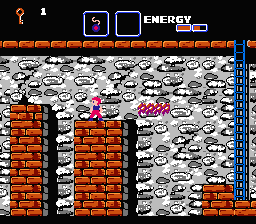
The Goonies II (NES)
The best-selling gaming console of its time, the NES helped revitalize the US video game industry following the video game crash of 1983, and set the standard for subsequent consoles in everything from game design to controller layout In addition, with the NES, Nintendo introduced a now-standard business model of software licensing for third-party developers.
Following a series of arcade game successes in the early 1980s, Nintendo made plans to produce a cartridge-based console. Masayuki Uemura designed the system, which was released in Japan on July 15, 1983 for ¥14,800 alongside three ports of Nintendo’s successful arcade games Donkey Kong, Donkey Kong Jr., and Popeye. The Nintendo Family Computer (Famicom) was slow to gather momentum; a bad chip set caused the initial release of the system to crash. Following a product recall and a reissue with a new motherboard, the Famicom’s popularity soared, becoming the best-selling game console in Japan by the end of 1984.

Jurassic Park (NES)
Encouraged by these successes, Nintendo soon turned its attention to the North American market. Nintendo entered into negotiations with Atari to release the Famicom under Atari’s name as the name Nintendo Advanced Video Gaming System; however, this deal eventually fell apart. Subsequent plans to market a Famicom console in North America featuring a keyboard, cassette data recorder, wireless joystick controller, and a special BASIC cartridge under the name "Nintendo Advanced Video System" likewise never materialized.
In June 1985, Nintendo unveiled its American version of the Famicom at the Consumer Electronics Show (CES). It rolled out its first systems to limited American markets on October 18, 1985, following up with a full-fledged North American release of the console in February of the following year. Nintendo simultaneously released eighteen launch titles: 10-Yard Fight, Baseball, Clu Clu Land, Donkey Kong Jr. Math, Duck Hunt, Excitebike, Golf, Gyromite, Hogan’s Alley, Ice Climber, Kung Fu, Mach Rider, Pinball, Stack-Up, Tennis, Wild Gunman, Wrecking Crew, and Super Mario Bros.

Batman: Return of the Joker (NES)
In Europe and Australia, the system was released to two separate marketing regions (A and B). Distribution in region B, consisting of most of mainland Europe (excluding Italy), was handled by a number of different companies, with Nintendo responsible for most cartridge releases; most of region B saw a 1986 release. Mattel handled distribution for region A, consisting of the United Kingdom, Ireland, Italy, Australia and New Zealand, starting the following year. Not until 1990 did Nintendo’s newly created European branch take over distribution throughout Europe. Despite the system’s lackluster performance outside of Japan and North America, by 1990 the NES had outsold all previously released consoles World-Wide.
As the 1990s dawned, however, renewed competition from technologically superior systems such as the 16-bit Sega Mega Drive (called the Sega Genesis in North America) marked the end of the NES’s dominance. Eclipsed by Nintendo’s own Super Nintendo Entertainment System (SNES), the NES’s user base gradually waned. Nintendo continued to support the system in North America through the first half of the decade, even releasing a new version of the console, the NES 2, to address many of the design flaws in the original NES hardware. The final games released for the system were as follows: in Japan, Adventure Island IV, and, in North America, among unlicensed titles, Sunday Funday was the last, whereas Wario's Woods was the last licensed game (also the only one with an ESRB rating). In the wake of ever decreasing sales and the lack of new software titles, Nintendo of America officially discontinued the NES by 1995. Despite this, Nintendo of Japan kept producing new Nintendo Famicom units up until October 2003, when it discontinued the line. Even as developers ceased production for the NES, a number of high-profile video game franchises and series for the NES were transitioned to newer consoles and remain popular to this day. Nintendo's own Super Mario Bros., The Legend of Zelda, and Metroid franchises debuted on the NES, as did Capcom's Mega Man franchise, Konami's Castlevania franchise, and Squaresoft's (now Square Enix's) Final Fantasy and Dragon Quest franchises.
Nintendo of Japan continued to repair Famicom systems until October 31, 2007, attributing the decision to discontinue support to an increasing shortage of the necessary parts." (Wikipedia)
What are Goodsets?
Goodsets are sets created by Cowering's GoodTools, a renamer program that has the ability to "see past" the headers attached to many console ROMs. These tools are fairly comprehensive but have not had many updates in the last year. File naming is not always accurate, but these are great "starter sets". They look to catalogue every known ROM of every game. Since each game can be packaged with goodmerge, there's is usually a very small increase in the collection size. Since No-intro uses zip, their sets tend to be larger than the 7zipped goodsets ( great example of this is the N64 set... the no-intro set is ~10gb where the goodset can fit on a dvdr ).
Download Nintendo - NES GoodNes 3.14
(Megaupload Mirror)
Download
Download
Download
(Rapidshare Mirror)
Download
Download
Download
Atari - 5200 Good5200 v2.01 (GoodMerged)
10:32 PM

"The Atari 5200 SuperSystem, or simply the Atari 5200, is a video game console that was introduced in 1982 by Atari Inc. as a replacement for the famous Atari 2600. The 5200 was created to compete with the Intellivision, but wound up more directly competing with the ColecoVision shortly after its release. A number of design flaws had a serious impact on usability, and the system is generally considered to have performed poorly on the market.
The 5200 was heavily based on Atari Inc.'s existing 400/800 computers and the internal hardware was almost identical. However, a number of issues (aside from the lack of a keyboard) meant that software was not directly compatible between the two systems.

Jungle Hunt (Atari 5200)
The Atari 5200 suffered from its software incompatibility with the Atari 2600, though an adapter was later released in 1983 allowing it to play all Atari 2600 games, using the more reliable controllers native to that system.
Another problem was the lack of attention that Atari Inc. gave to the console; most of its resources went to the already over saturated Atari 2600. It faced an uphill battle competing with the ColecoVision's head start and a faltering economy and video game market.

Pitfall (Atari 5200)
What are Goodsets?
Goodsets are sets created by Cowering's GoodTools, a renamer program that has the ability to "see past" the headers attached to many console ROMs. These tools are fairly comprehensive but have not had many updates in the last year. File naming is not always accurate, but these are great "starter sets". They look to catalogue every known ROM of every game. Since each game can be packaged with goodmerge, there's is usually a very small increase in the collection size. Since No-intro uses zip, their sets tend to be larger than the 7zipped goodsets ( great example of this is the N64 set... the no-intro set is ~10gb where the goodset can fit on a dvdr ).
Download Atari 5200 No-Intro
(Megaupload Mirror)
Download
Subscribe to:
Posts (Atom)


Download
Download
Download
Download
Download
Download
Download
Download
Download
Download
Download
Download
Download
Download
Download
Download
Download
Download
Download
Download
Download
Download
Download
Download
Download
Download
Download
Download
Download
Download
Download
Download
Download
Download
Download
Download
Download
Download
Download
Download
Download
Download
Download
Download
Download
Download
Download
Download
Download
Download
Download
Download
Download
Download
Download
Download
Download
Download
Download
Download
Download
Download
Download
Download
Download
Download
Download
Download
Download
Download
Download
Download
Download
Download
Download
Download
Download
Download
Download
Download
Download
Download
Download
Download
Download
Download
Download
Download
Download
Download
Download
Download
Download
Download
Download
Download
Download
Download
Download
Download
Download
Download
Download
Download
Download
Download
Download
Download
Download
Download
Download
Download
Download
Download
Download
Download
Download
Download
Download
Download
Download
Download
Download
Download
Download
Download
Download
Download
Download
Download
Download
Download
Download
Download
Download
Download
Download
Download
Download
Download
Download
Download
Download
Download
Download
Download
Download
Download
Download
Download
Download
Download
Download
Download
Download
Update:
Download